

So many Muslim women struggle to find clear authentic answers about their bodies because these topics are rarely discussed openly in our communities. You are not alone and you deserve knowledge that is halal trustworthy and rooted in our deen.
Frequently asked questions.
1. Periods (Hayd)
Q: Does brown discharge count as part of my period?
A: Yes — if it appears during your usual period days.
Aishah (RA) said:
“We considered yellow and brown discharge to be part of menstruation if it was during the days of hayd.”
(Bukhari)
2. Istihaadah (Irregular Bleeding)
Q: If I bleed for many days due to PCOS, do I pray?
A: Yes. Anything beyond your normal menstrual habit is istihaadah; you pray normally.
The Prophet ﷺ told Fatimah bint Abi Hubaysh (RA):
“This is from a vein, not menstruation.”
(Bukhari and Muslim)
3. Nifaas (Post-birth bleeding)
Q: If my bleeding stops before 40 days, can I pray?
A: Yes — once you see signs of purity, you make ghusl and pray.
Scholars agree based on the practice of the Sahabah’s wives.
8. Marriage
Q: Can a woman marry without her wali?
A: No.
The Prophet ﷺ said:
“There is no marriage without a wali.”
(Abu Dawood, Tirmidhi)
9. Divorce
Q: Can a husband divorce his pregnant wife?
A: Yes — and the divorce is valid. This is the consensus of scholars.
10. Intimacy
Q: Is intimacy allowed during menstruation?
A: Intercourse is not allowed.
Allah says:
“Do not approach them until they are pure.”
(Qur’an 2:222)


4. Pregnancy
Q: Do pregnant women have to fast in Ramadan?
A: If fasting harms the mother or baby, she may delay and make up the fast later.
Allah says:
“Allah does not burden a soul with more than it can bear.”
(Qur’an 2:286)
11. Masturbation
Q: Is self-stimulation allowed?
A: Most scholars say it is not allowed unless part of mutual spousal intimacy.
The Qur’an describes believers as those who guard their private parts except with spouses (23:5–7).
5. Ghusl with Braids
Q: Do I have to undo my braids for ghusl?
A: No — as long as water reaches the scalp.
The Prophet ﷺ told Umm Salamah (RA):
“It is enough to pour three handfuls of water over your head.”
(Muslim)
6. Salah
Q: Does normal discharge break wudu?
A: Clear/white everyday discharge does not break wudu according to many scholars, especially if constant.
Only impure discharge (blood, infection) requires renewal of wudu.
7. Fasting
Q: If I get my period right before Maghrib, is my fast valid?
A: No — the fast breaks as soon as the period starts.
This is the consensus of scholars.
12. Hijab
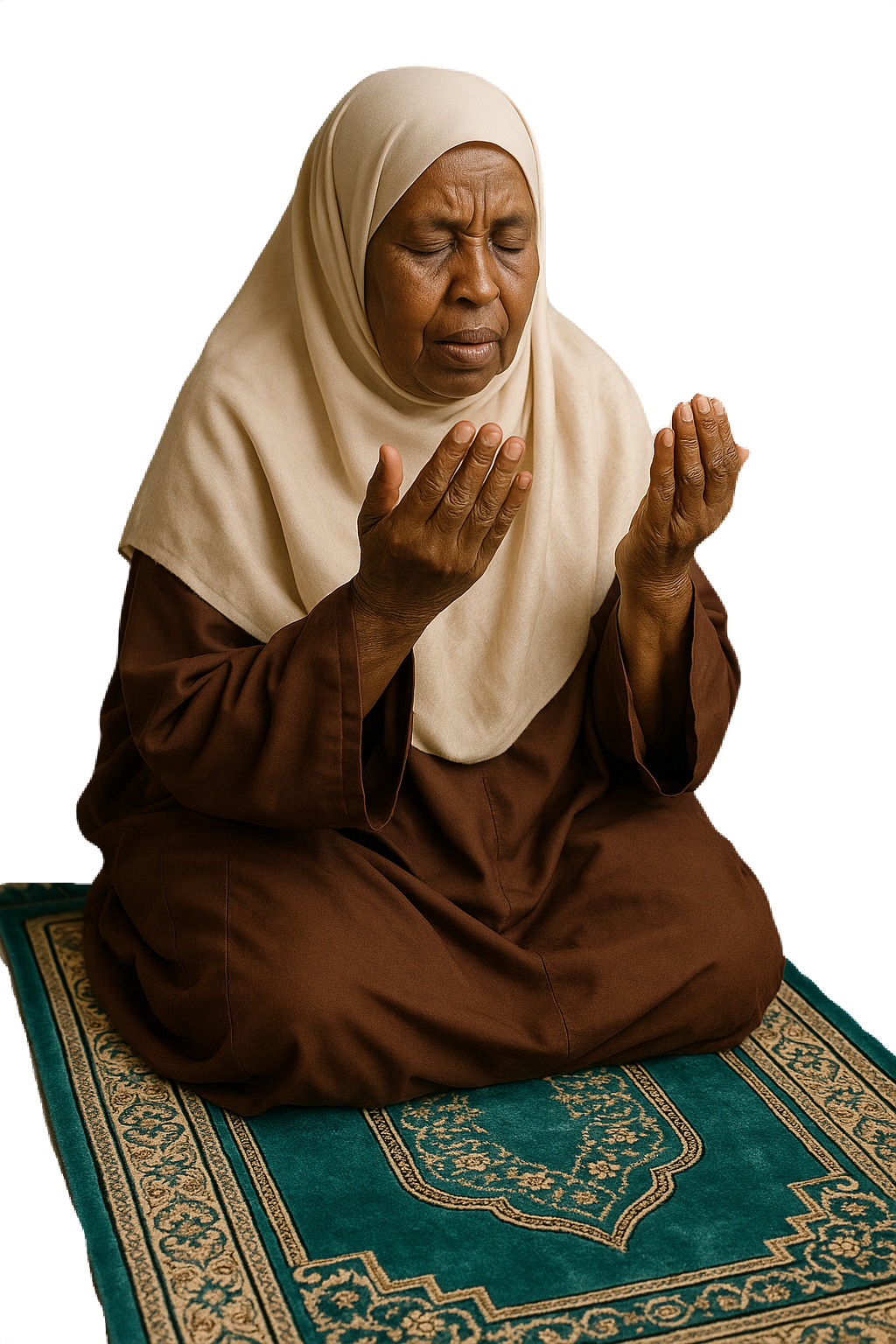
Q: Does hijab require covering all hair?
A: Yes — the head, neck, and chest must be covered.
Allah says:
“Draw their khimaar over their chests.”
(Qur’an 24:31)
13. Illness & Disability
Q: How does a woman pray if she can’t stand?
A: She sits and prays — or if she can’t sit, she prays laying down.
The Prophet ﷺ said:
“Pray standing; if you cannot, then sitting.”
(Bukhari)
14. Death & Burial
Q: Can a menstruating woman wash a deceased Muslim?
A: Yes — menstruation does not prevent her from washing the dead.
There is no evidence prohibiting it.
15. Qur’an & Worship
Q: Can a woman read or touch the Qur’an on her period?
A: She may read it (especially from memory or on a device).
The prohibition on touching mushaf while menstruating is based on scholarly opinion, not an explicit hadith.